Everything you actually need to know — before you arrive.
Introduction
I grew up in a ger. For me, it was just home. So when people ask what it's like to sleep in one, I have to think carefully — because what feels ordinary to me is genuinely unlike anything most visitors have experienced before.
Here is what I can tell you honestly.
What a Ger Actually Is
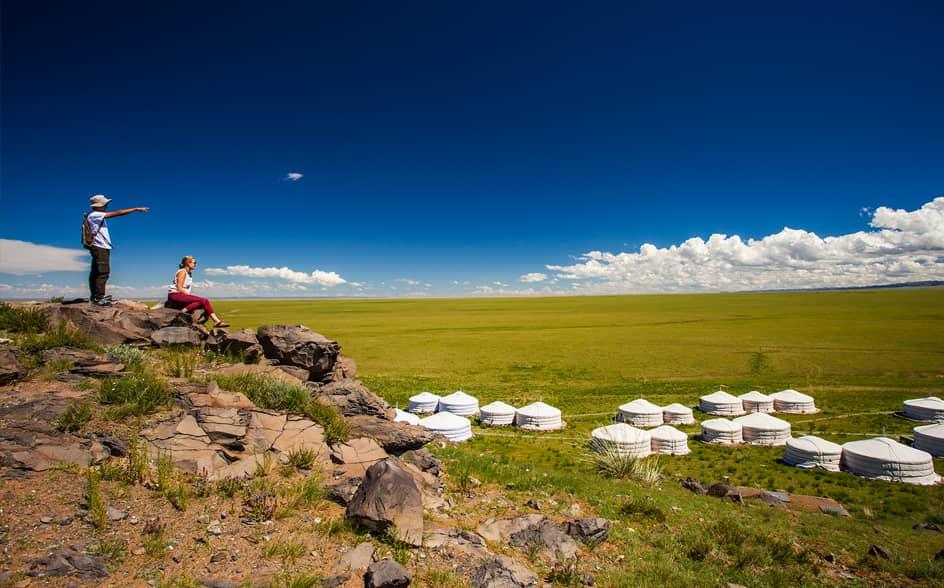
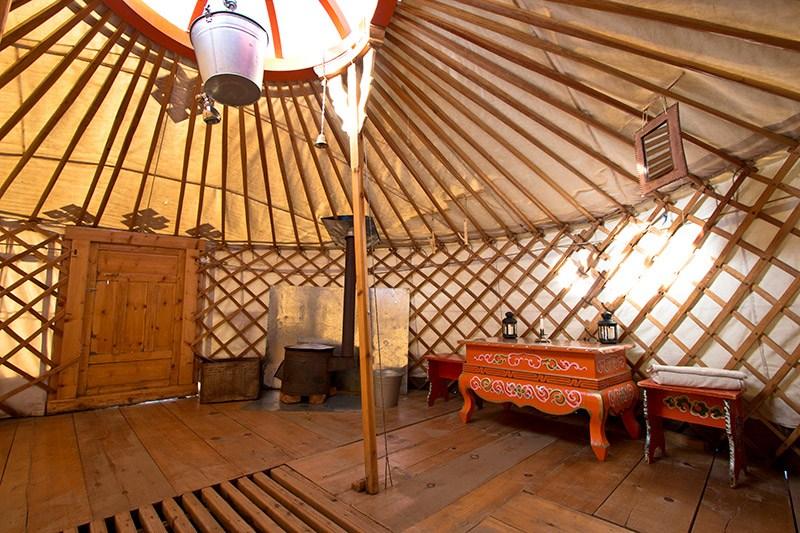
The word "ger" simply means "home" in Mongolian. It is not a tent. It is not a yurt — though that word is sometimes used interchangeably. A ger is a circular dwelling with a wooden lattice frame, felt insulation, and a canvas outer layer, supported by two central posts and topped with a smoke hole (toono) that opens to the sky.
It can be assembled or dismantled in one to two hours. It has been the home of Mongolian nomads for thousands of years. And once you've spent a night in one, you begin to understand why — it is warmer in winter, cooler in summer, and more structurally elegant than it looks from the outside.
The Door Always Faces South
This is not an accident. The ger is oriented deliberately — door facing south, altar at the north, men's side to the west, women's and kitchen side to the east. The two central support posts represent husband and wife, which is why you never walk between them.
When you enter, step with your right foot first and never touch the threshold — it is considered the "neck" of the home. Walk to the left, toward the guest side. Don't stand in the doorway.
Before entering, the traditional greeting is "Nokhoi khor" — "Hold the dog." This is how Mongolians announce themselves at any home, with or without a visible dog. It lets the family know someone is outside.
What the Night Actually Feels Like
In summer, a ger at night is one of the more pleasant sleeping experiences you will have anywhere. The felt walls breathe. You can open the toono above and watch the stars directly from your bed. The steppe breeze comes through cool and clean. No matter how warm the day was, Mongolian nights carry a freshness that is difficult to describe and easy to sleep through.
In winter, the fire in the central stove is never allowed to go out. Someone tends it through the night. The felt insulation is thick enough to hold heat even at extreme temperatures. You sleep warm. Waking up is the harder part — the moment you leave the covers.
Sharing Space
A ger has no internal walls, no separate rooms, no doors within. Everything happens in one shared space — cooking, eating, sleeping, conversation. If you are staying with a nomadic family rather than a tourist camp, you are in their home, not a room rented from them.
This is not uncomfortable once you accept it. But it is different from what most people are used to. Privacy, as a concept, works differently here. There are no secrets from anyone in the ger, and no one expects there to be. It is simply a different relationship with space.
The Outdoor Bathroom Question
In the countryside, there is often no indoor bathroom. Sometimes there is an outhouse. Sometimes there is open land. I grew up with this — for me it was simply normal. And I've watched dozens of visitors who were skeptical on day one treat it as completely unremarkable by day three.
This surprises people more than almost anything else. It shouldn't — it is simply part of being somewhere genuinely remote. Come prepared, and approach it the way you would any other aspect of being outdoors. Most people adjust within a day.
A Few Things Worth Knowing
Food and drink will be offered. Accept it, or at minimum bring the cup to your lips. Refusing what is offered is considered genuinely rude. This is not a formality — it reflects a deep tradition of hospitality that Mongolians take seriously.
The altar at the back of the ger is sacred. Don't sit with your back to it, and don't point your feet toward it when you sleep. Point your feet toward the door instead.
Accept everything with your right hand, or with both hands if something is heavy. Never with just the left.
If vodka is offered, dip your ring finger in and flick a small drop toward the sky, toward the wind, and toward the ground — an offering to Tengri (sky), the wind, and the earth. If you don't want to drink, perform the ritual anyway, touch your forehead with your finger, and return the glass. No one will press you further.
Don't whistle inside a ger. Don't put rubbish into the fire — fire is sacred and should not be treated as a rubbish bin.
Tourist Ger Camps vs. Nomadic Homes
There is a significant difference between staying at a tourist ger camp and staying with an actual nomadic family.
Tourist camps are designed for visitors — they often have beds, electricity, hot showers nearby, and a restaurant. The etiquette requirements are relaxed. You are a paying guest in a purpose-built facility.
A nomadic family home is something else. You are a guest in someone's life. The customs matter more, the space is more intimate, and the experience — when approached with genuine respect and curiosity — is unlike anything a tourist camp can offer.
Both are worth doing. They are simply different things.